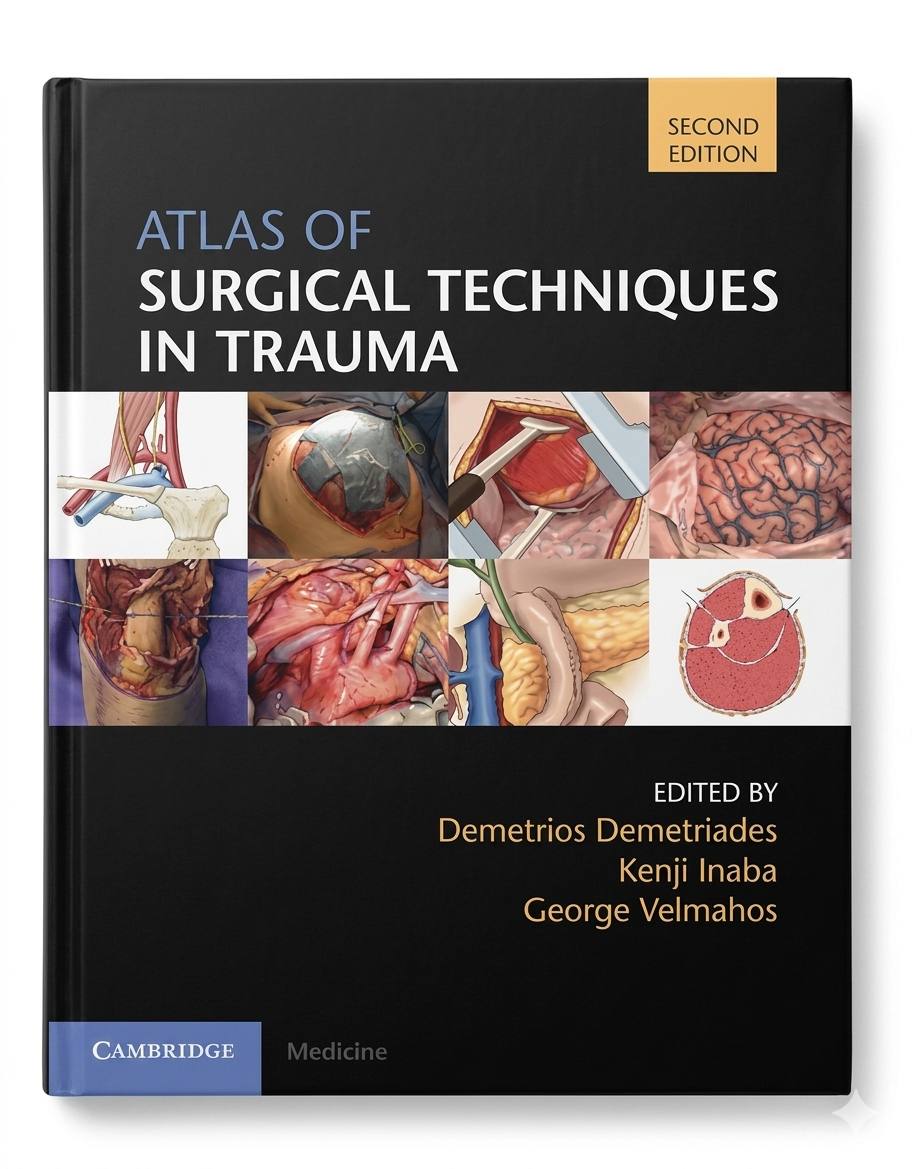
Atlas of Surgical Techniques in Trauma, 2nd Edition is a comprehensive and visually rich surgical reference designed to support the management of severely injured patients. Written for surgeons working in trauma care, it provides a detailed, practical guide to both common and uncommon trauma procedures.
This updated edition includes over 900 high-quality color photographs and illustrations that present procedures step by step on fresh, perfused, and ventilated cadavers. The book clearly explains practical surgical anatomy, procedural sequencing, and common technical pitfalls, helping readers understand not only how to perform each technique, but also how to do so safely and effectively.
Newer procedures such as REBOA, rib plating for flail chest, and skin grafting are included, reflecting the evolving nature of trauma surgery. Built on the experience of editors working in some of the busiest trauma centers in the world, this atlas is an essential resource for trainee surgeons, operating trauma surgeons, and emergency or critical care teams.
🔍 Key Features
• Over 900 color photographs and illustrations
• Step-by-step trauma operative techniques
• Covers common and uncommon trauma procedures
• Practical surgical anatomy and procedural sequencing
• Highlights technical pitfalls and safety points
• Includes newer techniques such as REBOA and rib plating
• Updated with additional photographs and current content
🎯 Ideal For
• Trauma surgeons
• Surgical trainees
• Emergency medicine doctors
• Critical care personnel
• General surgeons working away from academic centers
📖 Specifications
• Title: Atlas of Surgical Techniques in Trauma
• Edition: 2nd Edition
• Format: Surgical atlas
• Publisher: Cambridge Medicine
• Use: Trauma surgery reference and procedural learning
💡 Why It Stands Out
• Deep, procedure-focused trauma reference
• Excellent visual learning support
• Practical guidance for real trauma cases
• Useful for both training and operating room reference
• Strong emphasis on safe technique and anatomy
⚠️ Important Note
• Intended for educational and surgical reference use
• Best used alongside supervised clinical training and local trauma protocols



Reviews
There are no reviews yet.